

Be Thou My Vision – The Timeless Christian Hymn of Surrender, Wisdom, and Divine Guidance
▶️ Don't miss this Song of the Day ◀️
Be Thou My Vision is one of the most beloved and spiritually profound hymns in Christian history. Revered for its sacred melody and deeply devotional lyrics, the hymn has inspired believers for centuries with its message of complete dependence on God.
More than a traditional church song, “Be Thou My Vision” is a heartfelt prayer — a cry from the soul asking God to become the center of life, the source of wisdom, and the eternal light guiding every step.
Its timeless message continues to resonate with Christians around the world because it speaks directly to the deepest longing of the human heart: to walk closely with God.
The Ancient Origins of the Hymn
The roots of “Be Thou My Vision” trace back to an ancient Irish poem written around the 8th century. The original text reflected the faith and devotion of early Christians in Ireland who desired to live under the guidance and protection of God above all earthly things.
Centuries later, the poem was translated into English and paired with a traditional Irish melody, creating the hymn known today.
The Celtic musical style gives the hymn a peaceful, reverent, and deeply spiritual atmosphere that has made it enduring across generations and cultures.
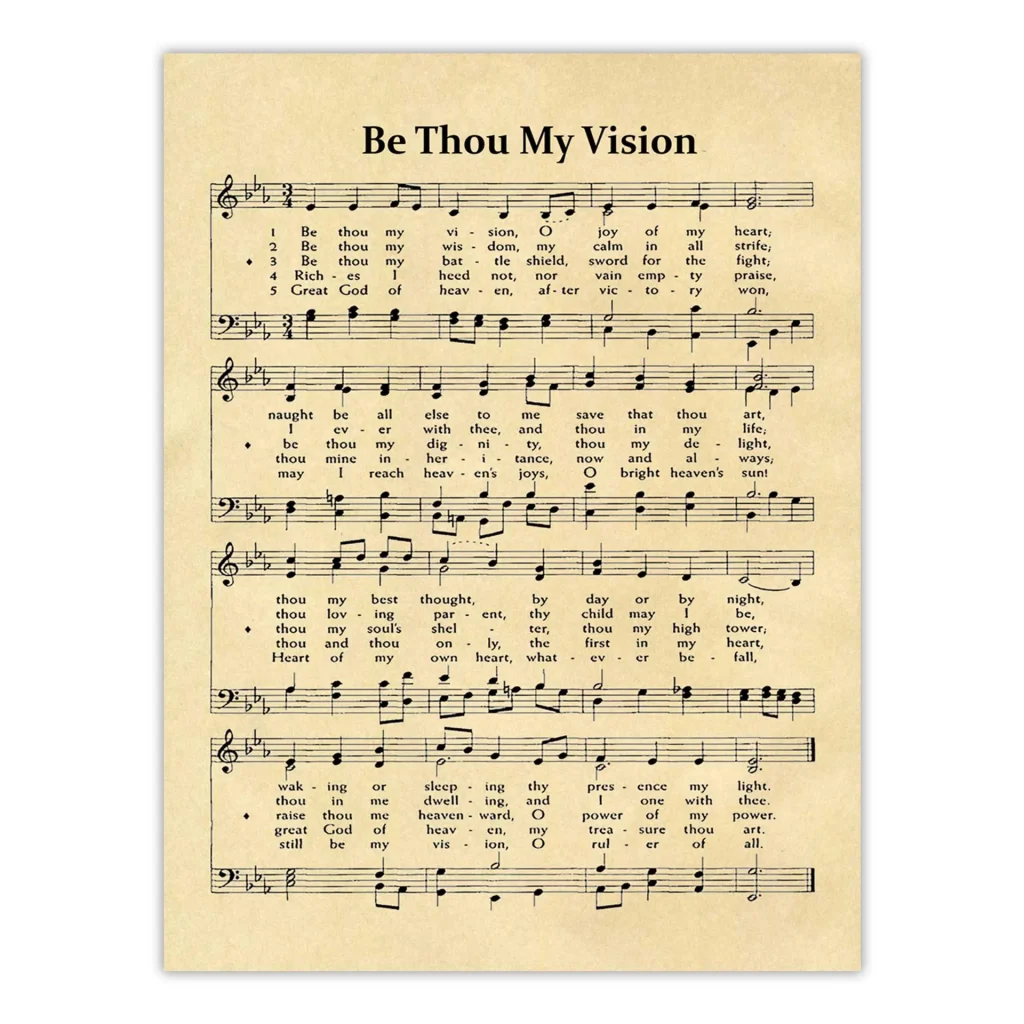
Full Lyrics:
The Spiritual Meaning Behind the Song
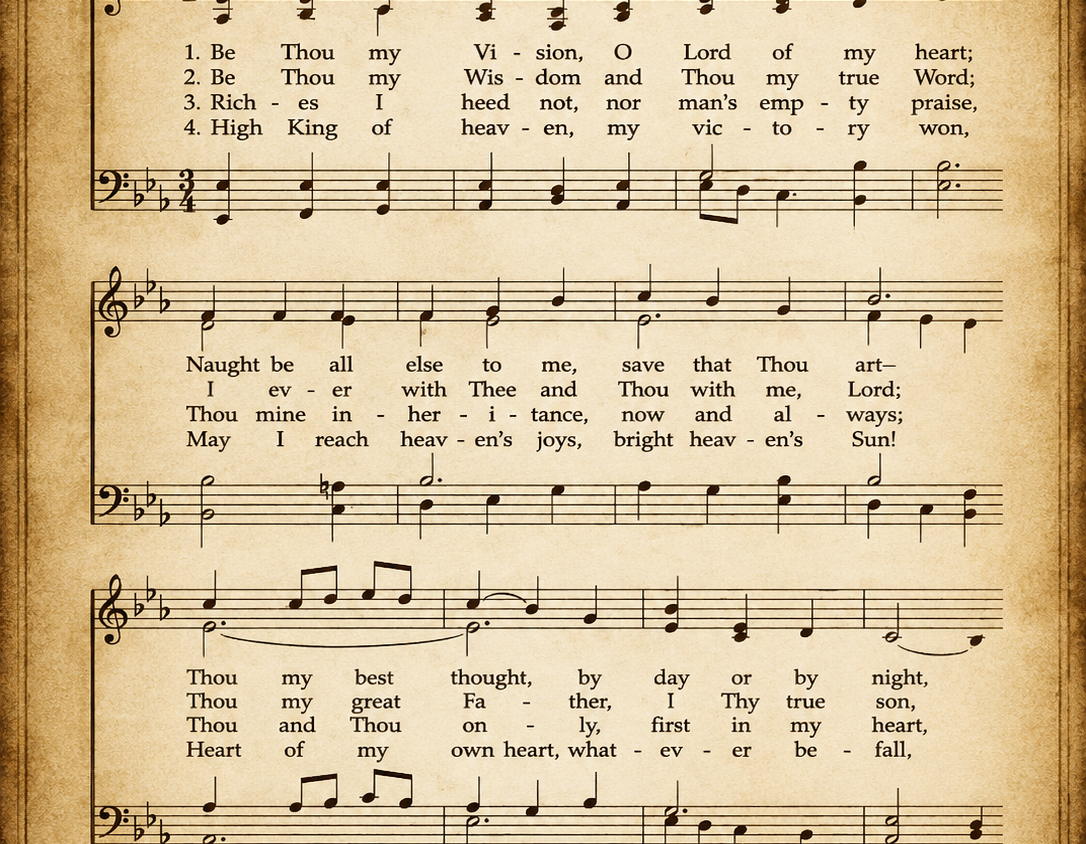
| 1. Be thou my vision, O Lord of my heart; Naught be all else to me save that thou art. Thou my best thought by day and by night; Waking or sleeping, thy presence my light. 2. Be thou my wisdom, and thou my true Word; I ever with thee and thou with me, Lord. Thou my great Father, I thy dear child; Thou in me dwelling, with thee reconciled. 3. Be thou my breastplate, my sword for the fight; Be thou my dignity, thou my delight. Thou my soul’s shelter, thou my high tow’r; Raise thou me Heav’nward, O Pow’r of my pow’r. |
God as the Vision of the Heart
The opening line declares:
“Be Thou my Vision, O Lord of my heart”
This is not merely poetic language. In Christian understanding, the “vision” of one’s heart represents the deepest focus, desire, and direction of life.
The hymn teaches that believers should not place their trust in wealth, success, recognition, or worldly ambition. Instead, Christ alone should become the center of thought, purpose, and identity.
For many Christians, this lyric becomes a daily prayer:
that God would guide their decisions, shape their character, and lead them through every season of life.
Divine Wisdom Over Human Understanding
Another powerful section says:
“Be Thou my Wisdom, and Thou my true Word”
In Christian faith, true wisdom comes not from human intellect alone, but from the presence and truth of God.
The hymn reflects a humble dependence upon the Lord — acknowledging that without God’s guidance, human understanding is limited and easily led astray.
This message is especially meaningful in times of uncertainty, suffering, or spiritual weakness. The song reminds believers that God remains faithful even in darkness.
Eternal Treasure Above Earthly Riches
One of the hymn’s most moving lines declares:
“Riches I heed not, nor man’s empty praise”
These words express a central theme of Christian belief:
earthly possessions and human approval are temporary, but the presence of God is eternal.
In today’s world, people often pursue success, status, and material wealth while feeling spiritually empty inside. “Be Thou My Vision” gently calls the heart back to what truly matters — communion with God.
The hymn encourages believers to seek heavenly treasure rather than temporary worldly glory.
Why the Hymn Still Inspires Christians Today
Even after hundreds of years, Be Thou My Vision continues to be sung in churches, weddings, prayer gatherings, choirs, and personal worship around the world.
Its enduring power comes from its sincerity and spiritual depth.
Unlike many modern songs focused on emotion alone, this hymn is rooted in reverence, surrender, and biblical truth. It speaks to Christians who long for a deeper relationship with God and a life centered entirely upon Him.
The melody itself carries a sacred stillness that invites reflection, peace, and worship.