I Believe in a Hill Called Mount Calvary
▶️ Don't miss this Song of the Day ◀️
There are Christian songs that tell us what happened at Calvary.
There are songs that ask us to remember the cross.
And then there are songs that ask a more personal question: What do you believe when everything else begins to change?
“I Believe in a Hill Called Mount Calvary” is one of those songs.
At first, it may sound like a simple gospel declaration. The title itself seems straightforward. But the deeper one listens to the song, the more its structure becomes apparent. It begins with the uncertainty of human life, moves toward faith in Christ, confronts the reality of death, and finally returns to the cross as the one thing the singer is unwilling to abandon.
That is why this song has lasted.
It is not simply singing about Calvary.
It is deciding where to stand.

A Song Born in 1968
“I Believe in a Hill Called Mount Calvary” was published in 1968. The text is credited to W. Dale Oldham, Gloria Gaither, and William J. Gaither, while the tune, MOUNT CALVARY, was composed by William J. Gaither. Hymnary records the song as having been published in numerous hymnals across several decades, showing that it moved beyond its original setting into the broader world of evangelical and gospel hymnody.
The year 1968 is worth remembering.
It was a period of considerable cultural and social change in the United States. Christian music was also evolving. Traditional hymnody remained important, but gospel music increasingly embraced a more personal and testimonial style.
That environment suited the Gaithers’ songwriting particularly well.
Rather than presenting theology as an abstract argument, their songs often brought theological convictions into the language of ordinary Christian experience.
“I Believe in a Hill Called Mount Calvary” does exactly that.
It does not begin with a theological explanation of the atonement.
It begins with life itself.
The Opening Question Is Really About Uncertainty
The song opens by reflecting on the shifting nature of human life.
That is an unusually effective way to begin a song about the cross.
Instead of immediately telling the listener what to believe, it first reminds us that the world around us is unstable.
Life changes.
Circumstances change.
People change.
The things that appear permanent often turn out to be temporary.
This is something every generation understands.
Someone listening to the song in 1968 would have recognized uncertainty in a very different cultural environment from ours. Yet more than half a century later, the same idea remains immediately recognizable.
We build careers.
We make plans.
We accumulate possessions.
We form relationships.
We imagine that tomorrow will resemble today.
And then something happens that reminds us how little control we actually possess.
That is where the song becomes more than a gospel standard.
It becomes a question of foundation.
If everything around me is capable of changing, what remains?
“I Believe” Is More Than a Religious Phrase
The central declaration of the song is remarkably simple: “I believe.”
But the importance of those words lies in what follows.
The singer does not claim to understand every mystery of life.
Instead, faith is presented as a decision to hold onto Christ even when understanding has limits.
This is a recurring theme throughout Christian history.
Faith has never meant that every question has been answered.
The biblical tradition contains people who questioned, struggled, waited, doubted, lamented, and prayed without knowing what would happen next.
Christian faith, at its strongest, does not require pretending that uncertainty does not exist.
It asks what we will hold onto in the middle of it.
That is the deeper meaning of the song’s opening declaration.
“I believe” is not saying, “I understand everything.”
It is saying, “I know where I will stand.”
Why Mount Calvary?
The title could have been “I Believe in the Cross.”
Instead, the writers chose a hill.
That choice gives the song a particular kind of imagery.
A hill is something that can be seen from a distance.
It is a place.
It has a physical location.
It can be approached, remembered, and pointed toward.
In the Christian imagination, Calvary is not merely an idea. It is the place associated with the crucifixion of Jesus.
The Gospel of Luke identifies the place of Jesus’ crucifixion as “The Skull,” traditionally associated with Calvary or Golgotha. The song takes that historical location and turns it into a spiritual landmark.
The hill becomes a place of certainty.
The world may shift.
Human life may be temporary.
But the singer continues to look toward Calvary.
That is a powerful image because it transforms the cross from a symbol into a point of orientation.
When everything else is moving, the believer knows where to look.
The Cross Is Not Presented as Decoration
One of the dangers of familiarity is that important symbols can lose their weight.
The cross is everywhere in Christian culture.
It appears on church buildings, jewelry, artwork, books, cemeteries, and countless pieces of Christian merchandise.
But the historical cross was not decorative.
It was an instrument of execution.
Crucifixion was deliberately brutal and humiliating.
The Christian claim is therefore extraordinary: an instrument of death became the central symbol of redemption.
“I Believe in a Hill Called Mount Calvary” does not attempt to soften this paradox.
Instead, it embraces it.
The song looks directly toward the cross and declares that the Christ who died there still has power to change lives.
That movement from historical event to present transformation is one of the song’s most important theological ideas.
From History to Personal Transformation
A song about the crucifixion could remain entirely in the past.
Jesus died.
The cross stood at Calvary.
The tomb followed.
The historical story is complete.
But gospel music often asks a different question.
What does that story mean now?
“I Believe in a Hill Called Mount Calvary” answers through testimony.
The Christ who was crucified is presented as the Christ who still changes lives.
That is a defining characteristic of evangelical gospel music.
The Gospel is not treated simply as historical information. It is treated as something that enters the present life of the believer.
This is why the song eventually becomes personal.
The singer is not merely defending a doctrine.
The singer is pointing to a changed life.
The message is essentially this: I believe because Christ is not merely someone I have heard about. His work has meaning for who I am.
That distinction gives the song its emotional credibility.
The Mystery of Life and the Reality of Death
Another reason this song has remained relevant is its willingness to talk about death.
Modern culture often tries to keep death at a distance.
We speak about health, youth, success, and the future. We celebrate beginnings much more easily than endings.
Christian hymnody has historically been different.
It has spoken openly about mortality.
The song recognizes that earthly life will eventually come to an end. But it does not stop there.
Faith is presented as something that can confront darkness and death.
This is not an attempt to deny grief.
Christianity does not teach that death is emotionally insignificant.
Jesus Himself wept at the death of Lazarus.
The Christian claim is something more specific: death is real, but it is not ultimate.
That distinction lies near the heart of the Gospel.
“Faith Will Conquer the Darkness”
The song’s treatment of darkness is especially significant.
Darkness is one of the oldest metaphors in Christian literature.
It can represent suffering, ignorance, fear, sin, uncertainty, or death.
The Bible repeatedly contrasts darkness with light, particularly in passages concerning Christ.
In this song, faith is placed in opposition to darkness and death.
But notice what the song does not say.
It does not say that darkness never comes.
It assumes that darkness is part of human existence.
The point is that darkness does not have the final word.
That is a much stronger form of hope.
Christian hope is not necessarily the belief that nothing painful will happen.
It is the belief that pain, suffering, and death do not ultimately determine the meaning of the story.
The Old Rugged Cross and the Language of Commitment
The song eventually returns to the image of the “old rugged cross,” connecting itself with one of the best-known traditions in American gospel hymnody.
But there is an important word in the song’s declaration: “cling.”
To cling to something implies that letting go is possible.
It suggests determination.
It suggests that circumstances may challenge belief.
It suggests that faith is not always effortless.
This is a subtle but important feature of the song.
The singer does not say that the world will always make faith easy.
Instead, the singer declares a willingness to hold on.
That makes the song especially powerful when sung by someone who has lived through many years of experience.
For a young believer, “I believe” may sound like a declaration of conviction.
For someone who has experienced decades of loss, disappointment, change, and uncertainty, the same words can sound like a testimony.
Why the Song Works So Well as a Testimony
Hymnary classifies the song in contexts associated with the cross, testimony, loyalty, and witness. It has appeared in a wide range of hymnals, including Baptist Hymnal 2008, The Celebration Hymnal, Hymns of Faith, Songs of Faith and Praise, Worship His Majesty, and others.
That history tells us something about the song.
It was not simply preserved as an interesting piece of music.
It became useful.
Churches could sing it.
Choirs could perform it.
Quartets could arrange it.
Individuals could use it as a personal testimony.
The song’s structure makes that possible.
The verses tell a story of uncertainty, mortality, faith, and transformation.
The refrain turns that story into a declaration.
The listener is not left merely thinking about Christian doctrine.
The listener is invited to say something personally.
I believe.
That is a powerful function for a hymn.
Why Bill and Gloria Gaither’s Musical Tradition Matters
The Gaithers became major figures in American Christian music, particularly through their songwriting, performances, and later the Gaither Homecoming movement.
Their influence is important when considering why songs such as “I Believe in a Hill Called Mount Calvary” reached such a broad audience.
The music is accessible.
The theology is direct.
The emotional movement is gradual.
And the central statement is easy to remember.
The tune MOUNT CALVARY is identified by Hymnary as William J. Gaither’s 1968 composition and is recorded in numerous hymnals.
The musical simplicity is not a weakness.
It is part of the song’s effectiveness.
A congregation does not need to analyze the melody before singing it.
The music gives the words room to speak.
Why People Still Return to This Song
There is a reason old gospel songs often return at important moments in people’s lives.
They are sung at church services.
They are heard at funerals.
They appear in revival meetings.
They are performed by choirs and gospel groups.
They are passed from parents to children.
And eventually, the words become connected with memories.
A person may hear the song decades after first encountering it and suddenly remember a parent who used to sing it, a church they attended as a child, a difficult season they survived, or a moment when their faith became particularly important.
At that point, the song is no longer simply music.
It has become part of a person’s spiritual memory.
That may be one of the strongest reasons hymns survive.
They become attached to lives.
The Deeper Message: What Will You Hold Onto?
The most interesting question raised by “I Believe in a Hill Called Mount Calvary” may not be historical at all.
It is personal.
What happens when the things you trusted begin to disappear?
What happens when the future does not unfold as expected?
What happens when life reminds you that nothing earthly is permanent?
The song offers an answer without pretending to solve every mystery.
Look toward Calvary.
Hold onto Christ.
Remember the cross.
Believe that His work still has meaning.
This is not a promise of an easy life.
It is a declaration of where faith chooses to stand.
More Than Fifty Years Later
More than fifty years after its publication, “I Believe in a Hill Called Mount Calvary” continues to appear in Christian hymnals and performances. Hymnary currently documents numerous hymnal appearances spanning from the 1970s through more recent collections.
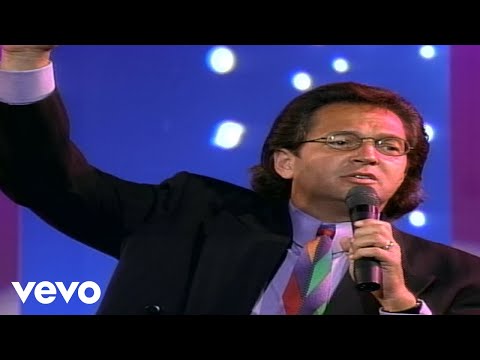
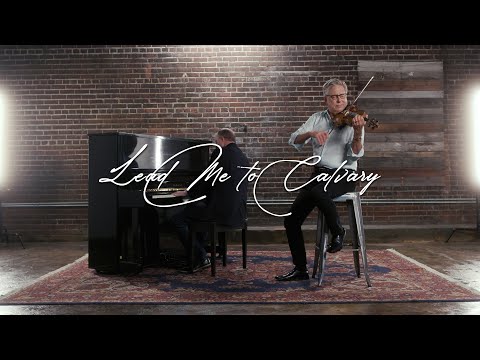
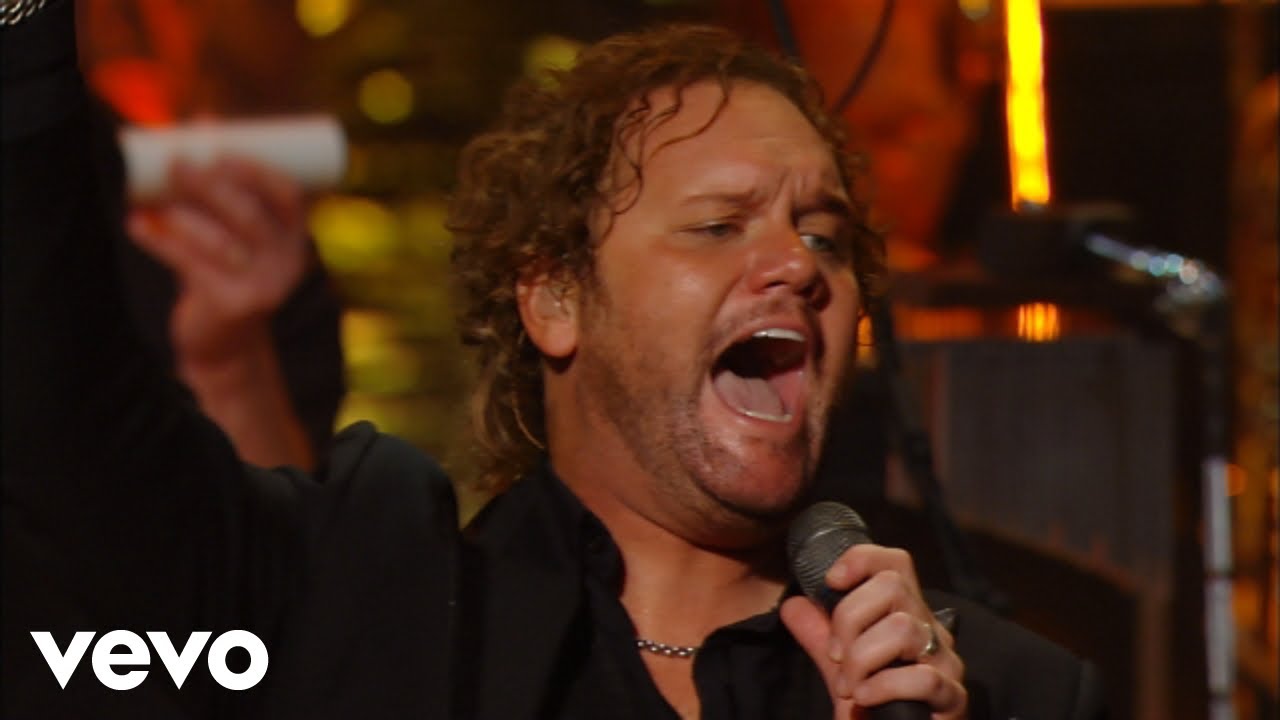
The official Gaither Music presentation of the song also demonstrates its continuing life in performance. A Gaither Vocal Band performance has accumulated millions of views, while Gaither Music has continued to present the song to contemporary audiences.
That is significant.
The song has moved across generations without requiring its central message to be rewritten.
Its language remains direct.
Its theology remains recognizable.
Its central image remains powerful.
And its declaration remains personal.
The Hill That Remains When Everything Else Changes
Perhaps the enduring strength of “I Believe in a Hill Called Mount Calvary” can be found in the contrast at its center.
The world is shifting.
Life is temporary.
Death is real.
Human understanding is limited.
But the singer chooses to believe.
Not because every question has been answered.
Not because suffering has disappeared.
Not because the future is completely known.
But because the cross remains.
That is why the song is more than a celebration of an event that happened centuries ago.
It is a song about certainty in the middle of uncertainty.
It is about faith when understanding reaches its limits.
It is about the conviction that Christ’s death was not the end of the story.
And ultimately, it is about a person choosing where to place the weight of his or her life.
For Christians, that place is Calvary.
The hill itself is ancient.
The cross is familiar.
The story has been told countless times.
Yet the question remains as relevant today as it was when the song was written in 1968:
When everything else is shifting, what will you still believe?
For more than half a century, this song has given the Christian answer in remarkably simple words.
I believe.
And that is why, when time has passed, circumstances have changed, and the world around us has moved on, the singer still looks toward that hill called Mount Calvary.