
He’s Got the Whole World in His Hands
▶️ Don't miss this Song of the Day ◀️
You can probably hum it this second. Four short lines, the same words three times, and then that quiet landing — He’s got the whole world in His hands.Sung in Sunday school rooms with hand motions, hummed by a mother folding laundry, swayed to in a wooden church where the only instruments are feet, palms, and voices, it may be the most-sung song of trust in the English language.
It is also far older and far more serious than most of us realize. The little tune we teach to children was carried for decades inside the memory of a people who had almost nothing to call their own, and it survived because it said something their lives kept denying: that the world — the whole world — rested securely in the hands of God. Before it became a campfire favorite and a pop hit, it was a confession of faith sung against the grain of history.
This article traces the song from its hidden beginnings in the African American church, through its first printing in 1927, to the steps of the Lincoln Memorial and the pop charts of 1958. You’ll find the full lyrics, a musician’s guide to the tune and chords, and an honest look at what the song still means when the news is heavy.
What Kind of Song Is This?
“He’s Got the Whole World in His Hands” belongs to the great body of African American music called the spiritual. Spirituals were not composed so much as raised — built line by line, in call and response, by congregations and work crews who reshaped the words and the tune as they sang. Nobody knows who first sang this one, or exactly when. Like the other classics of the tradition — “Swing Low, Sweet Chariot,” “Sometimes I Feel Like a Motherless Child,” “Were You There?” — it was passed from voice to voice, never written down, for years before anyone thought to print it.
The spirituals grew out of the meeting of two worlds: the biblical imagination of the slaves, who found themselves inside the stories of Israel’s captivity and deliverance, and the musical instincts of West African ancestors, who sang in rhythm, in dialogue, and in repetition. The result was a sacred music that could hold both sorrow and defiance, both grief and an almost unbearable hope. A spiritual was often the only place a person could say, out loud, what the law said they could not.
Scholars believe “He’s Got the Whole World in His Hands” took shape in the decades after the Civil War, in the prayer meetings and brush-arbor gatherings of the American South. Its exact birthplace, like its author, is lost to us — and the song itself never seems to have minded. It was made to be shared, not signed.

The First Printing: 1927
For roughly half a century the song lived only in memory. Then, in 1927, it found its way into print in a collection called Spirituals Triumphant, Old and New, gathered and arranged by the composer and educator Edward Hammond Boatner (1898–1981).
Boatner did not invent the song, and he never pretended to. He credited his father, the Rev. Daniel Webster Boatner, a Methodist minister, for his lifelong love of spirituals. The elder Boatner had heard songs like this sung at his own father’s prayer meetings — gatherings of freed people whose worship still carried the sound of the plantation era. Edward Hammond Boatner, whose grandparents had been enslaved, grew up inside that tradition, and his collection helped carry it into the wider world of American sacred music.
In Boatner’s 1927 printing, the song looked a little different from the one we sing today. The “hand” was singular. The verses named his mother, his father, “all the power,” “the fishes of the sea,” and “the whole church.” The melody, set down in a plain, six-note scale, was simpler than the version most hymnals now use. But the heart of it was already there — the same four-line refrain, circling back again and again to the image of a world held in God’s hand.
Almost as soon as the song appeared in print, it began to be recorded. In February 1929 the preacher and gospel singer Rev. F. W. McGee put it on wax for Victor Records in Chicago. Later that same year, Bessie Johnson’s Sanctified Singers recorded it for OKeh, and in 1930 Brother Williams Sanctified Singers followed for Vocalion. The recordings are important beyond their music: they show the song traveling out of the rural South and into the cities of the Great Migration, where it would keep changing as it went.
Meanwhile, the folklorists were listening. In 1933, a young singer and collector named Frank Warner heard a North Carolina woman, Sue Thomas, sing the spiritual, and he carried her version into the American folk revival. Warner recorded it himself on his 1952 album American Folk Songs and Ballads, and through him the song reached a new generation of musicians who had never set foot in a Southern church. The folkies called it a treasure of the people. They were right, though they only knew half the story.
A Song That Keeps Changing Its Clothes
One of the loveliest things about this spiritual is that it has no fixed text — and never wanted one. Oral songs are living things, and each generation has dressed this one in its own verses.
Boatner’s 1927 version sang about mother and father, the fish of the sea, the power of God, the whole church. By mid-century, the verses most Americans sang had shifted to brothers and sisters, and the singular “hand” had become the plural “hands.” In the 1981 collection Songs of Zion, the song appears in a simple melody-only form with the family lines that point beyond blood relatives — He’s got my sister and my brother — so that the whole congregation can hear itself in the words. The African American Heritage Hymnal (2001) reached back to restore the older, singular “hand.”
Today’s best-loved form, the one printed in children’s hymnals and Sunday school songbooks, adds the verses almost everyone can recite from childhood:
- the mommies and the daddies,
- my brothers and my sisters,
- the little bitty babies,
- and that sweeping final verse that refuses to leave anyone out: everybody here, everybody there, everybody everywhere.
Watch what the song is doing as those verses multiply. It starts at the scale of the whole world and then zooms in — to a mother, a father, a baby — and then zooms back out to everyone, everywhere. The structure itself is a kind of theology: a God big enough for the cosmos who still keeps a particular eye on the smallest and most fragile of us.
And because the song belongs to oral tradition, it still invites you to add your own verse. That is not a corruption of the song; it is the way the song has always worked. A choir director in Ohio can sing “He’s got my church family in His hands,” a father in Texas can sing his children’s names, and both are singing the spiritual exactly as it was meant to be sung — as a living prayer.
The Voice That Carried It into History: Marian Anderson
No single artist is more responsible for the song’s place in American memory than Marian Anderson, the great contralto whose voice, the conductor Arturo Toscanini said, was one heard “once in a hundred years.”
Anderson had grown up singing spirituals in the Union Baptist Church choir of South Philadelphia, and she never left them behind, even at the height of her international career as an opera and concert singer. In 1951–52 she recorded “He’s Got the Whole World in His Hands” in a dramatic concert arrangement by the composer Hamilton Forrest, who had dedicated the setting to her; it appeared on her RCA Victor Red Seal album of eleven great spirituals. Anderson called the song one of the signatures of her career and sang it in recital halls on every continent.
Her most historic performance came in 1963. On August 28, at the March on Washington for Jobs and Freedom, the same steps of the Lincoln Memorial where she had sung to 75,000 people on Easter Sunday 1939 — after the Daughters of the American Revolution had refused to let her sing in their Constitution Hall because of her color — Anderson rose to sing again. Her turn followed the Rev. Dr. Martin Luther King Jr.’s “I Have a Dream” speech, and she chose “He’s Got the Whole World in His Hands.”
She had explained her attachment to the song in words that deserve remembering: “This spiritual reminds us not to lose sight of the fact that we have our times of extremity and that there is a Being who can help us at such a time.” That 1963 performance was added to the Library of Congress National Recording Registry in 2003 and inducted into the Grammy Hall of Fame in 2008. No children’s song earns that honor. A people’s testimony does.
A Thirteen-Year-Old Puts It on the Pop Charts
The song’s strange second life began in 1957, when a thirteen-year-old boy from Bethnal Green in East London named Laurie London walked into a studio with the Geoff Love Orchestra and sang it in a bright, swinging style that had skiffle in one ear and gospel in the other.
Released on Parlophone, the single reached No. 12 in Britain in November 1957. Then something almost unprecedented happened: it crossed the Atlantic and climbed. In the spring of 1958 it spent four weeks at No. 1 on Billboard’s “Most Played by Jockeys” survey and also topped Cash Box’s chart — making it the first gospel-rooted single ever to lead an American pop survey, and the most successful British record of the decade on U.S. shores. It sold enough copies to earn a gold record, and London performed it on The Ed Sullivan Show in April 1958. One small footnote to the story: the writing credits on the record — “Robert Lindon” and “William Henry” — were pen names for the British songwriters Jack Waller and Ralph Reader, who had used the song in their 1956 stage musical Wild Grows the Heather. The spiritual itself was too old and too communal to have an author to pay.
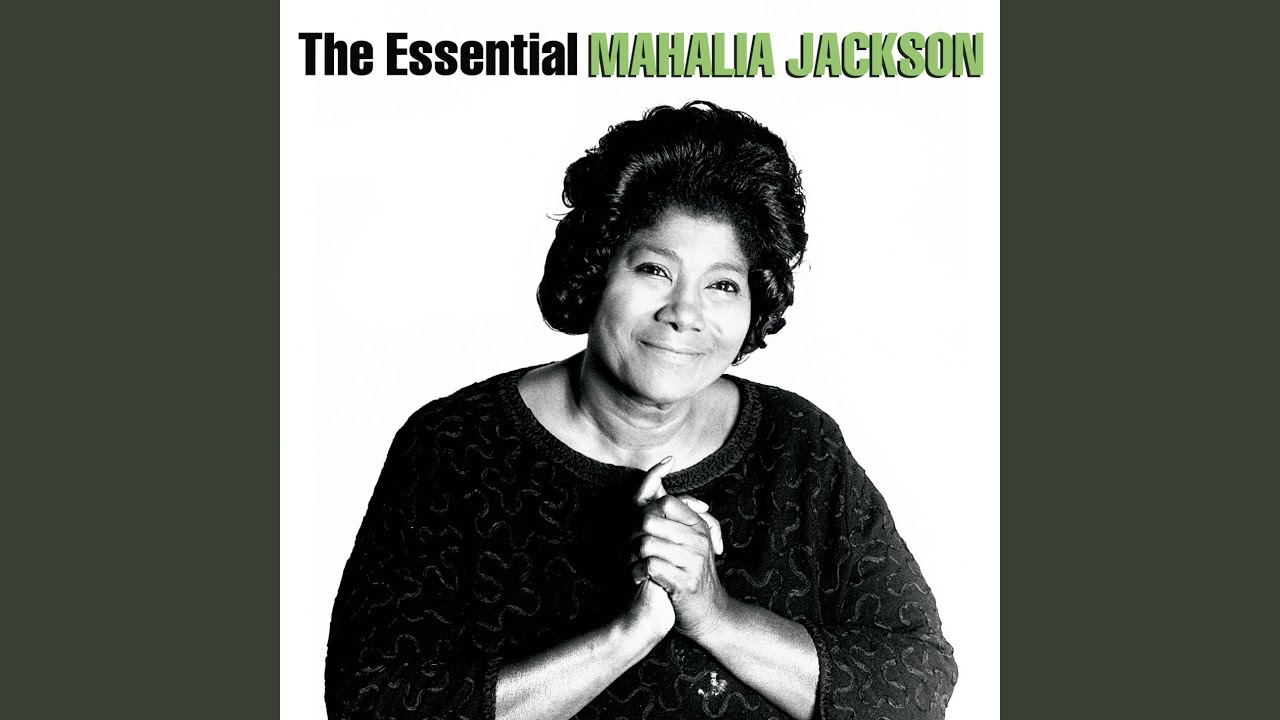
The pop moment mattered more than novelty, because it came at a strange crossroads in American life. White teenagers were dancing to a song born in Black churches at the very moment the Civil Rights Movement was forcing the nation to face what those churches had endured. And the gospel singers kept claiming the song with the full weight of their tradition: Mahalia Jackson took her 1958 recording onto the Billboard Hot 100, George Beverly Shea sang it for decades at Billy Graham crusades, and versions followed from Judy Garland, Kate Smith, Perry Como, Odetta, and — most hauntingly — Nina Simone, whose version dates from her very first recording session in 1957. The song had outgrown any single style. It belonged to everybody, everywhere — which, if you think about it, had been the point all along.
The Music: What the Song Sounds Like and How to Play It
For a song with so much history inside it, the tune is disarmingly plain — and that plainness is the genius of it.
The melody. The tune moves mostly by step, with gentle lifts rather than dramatic leaps, and its range sits comfortably within about an octave — no high notes to strain the congregation, no low ones to lose the children. The shape of each phrase does real work: the line climbs and opens out as the singer declares the good news, then settles downward to rest on the word “hands,” like a body relaxing into a chair. There is a reason the earliest printed melody (mi–sol–mi–sol) was later simplified by the oral tradition into the sol–sol–mi–sol opening most hymnals use today: the song kept being smoothed by the millions of ordinary voices that sang it. Every verse ends by returning to the refrain line, “He’s got the whole world in His hands,” which functions as both chorus and landing place. In the old congregational practice, a leader would sing each line and the people would answer — and because the verses are interchangeable “floating verses,” the leader could build the song out of whatever the moment required.
Key, meter, and chords. Hymnals and lead sheets usually set the song in a friendly key such as G major, in a plain 4/4 with an unhurried, swaying feel (some arrangements write it in 6/8 for the same reason — it wants to rock). The harmony needs no more than three chords, the I, IV, and V — in G, that is:
G — He's got the whole world in His hands,
C — He's got the whole world in His hands,
G — He's got the whole world in His hands,
D7 → G — He's got the whole world in His hands.
Most guitarists and pianists can accompany the entire song with those three chords and a steady pulse. If you play it in a church service, resist the temptation to decorate it. The song sounds best when the accompaniment leaves room for voices, handclaps on beats two and four, and the natural swing the song carries in its bones.
Leading it. Keep the tempo moderate — this is a song to rock, not to race. Many congregations sing it with a quiet intensity that builds across the verses and then pulls back, letting the last “whole world” land at almost a whisper, the way a prayer ends. For children, the verses about mommies, daddies, and little bitty babies are made for hand motions, and there is a whole affectionate tradition of children raising cupped hands at the word “hands.” And if you lead a congregation, do not be shy about inserting a verse for your own people — that is not an innovation. It is the oldest tradition the song has.
The Lyrics
Below is the familiar form of the song — the shape most of us learned in Sunday school and the one printed in most children’s hymnals today. (Earlier and later editions vary, as described above; many hymnals also print the alternate refrain “He’s got you and me, brother, in His hands,” and some restore the older singular “in His hand.”)
He’s got the whole world in His hands,
He’s got the whole world in His hands,
He’s got the whole world in His hands,
He’s got the whole world in His hands.He’s got the mommies and the daddies in His hands,
He’s got the mommies and the daddies in His hands,
He’s got the mommies and the daddies in His hands,
He’s got the whole world in His hands.He’s got my brothers and my sisters in His hands,
He’s got my brothers and my sisters in His hands,
He’s got my brothers and my sisters in His hands,
He’s got the whole world in His hands.He’s got the little bitty babies in His hands,
He’s got the little bitty babies in His hands,
He’s got the little bitty babies in His hands,
He’s got the whole world in His hands.He’s got everybody here in His hands,
He’s got everybody there in His hands,
He’s got everybody everywhere in His hands,
He’s got the whole world in His hands.
What the Song Means
Underneath its gentle surface, this is one of the boldest statements in all of sacred song. Consider the claim it makes: the world — with all its oceans and armies and weather and money and empires — is not ultimately in the hands of the powerful. It is in the hands of God.
The image reaches deep into Scripture. Isaiah 40:12 describes the Lord who “measured the waters in the hollow of his hand” and weighed the mountains on a scale — a God so vast that creation itself fits in the palm of His hand. Psalm 95 sings that “in his hand are the depths of the earth,” and Job confesses that “in his hand is the life of every living thing and the breath of all mankind.” Jesus makes the same point smaller and closer to home in Matthew’s gospel, where He teaches that not even a sparrow falls without the Father’s notice — and that we are worth more than many sparrows. The spiritual simply takes these promises and sings them the way a child takes a hand: not arguing, just holding on.
But the song’s deepest meaning is bound up with the people who first sang it. Think about what it meant to sing “He’s got my mother in His hands” in a world where mothers and fathers could be sold away from their children, where families could be broken by a whim of law or economy, where a person could protect almost nothing and no one they loved. The verse is not sentimental. It is an act of trust by people who had learned, in the hardest school there is, that human power will fail you — and that there is a hand that never will. The song became, in time, an anthem of the Civil Rights Movement, sung by people who were still waiting for the law to catch up with the truth their music already knew: that every person, everywhere, is held in the same hand.
Two truths are braided through the song, and both are essential. The first is God’s bigness: the whole world, the wind and the rain, the sun and the moon. The second is God’s nearness: a tiny baby, a brother, a sister, “you and me.” The song refuses to choose between them. It holds the hugeness of God and the particularity of a mother’s love in the same breath, because the gospel does too.
It is worth noting what the song does not promise. It never says nothing bad will happen. The people who made it knew better than anyone that trouble comes. What it says is more radical: that nothing is ever outside the care of God, that no one falls beyond His reach, and that the story does not end where the world’s cruelty says it does. For anxious times — ours included — that is not a childish comfort. It is the mature faith of a people who sang their way through the darkest century of their history and came out the other side still singing.
Why We Still Sing It
Every generation rediscovers this song, and each one discovers something slightly different in it. Children find safety. Parents find the words for what they cannot control. Choirs find a tune that fills a room without needing a single instrument. And people in trouble find the oldest comfort in the world: the knowledge that they are not holding their lives alone.
Perhaps that is why the song keeps appearing at the hinge moments of American history — at the Lincoln Memorial in 1963, on the radio during the Cold War, in classrooms and hospitals and funerals ever since. It has held the world through wars and pandemics and everything in between, and the world is still heavy. The hands are still there.
So sing it this week — slowly, the way it was meant to go. Let the children do the motions. Add a verse for someone you love. And when you come to the last line, notice what your body already knows: that the whole world, with all its sorrows and all its people, is resting exactly where it has always rested — in the hands of God.