
How good is the Lord we adore (Hymn 167) Piano Sheet Music (Free PDF)
Quick Repertoire Overview: How good is the Lord we adore (Hymn 167) is arranged for solo piano with vocal chords and lyrics in the key of G Major (meter: 4/4, tempo: 88 BPM). Graded at an Beginner skill level, this complete 2-page Urtext vector edition is formatted for standard US Letter (8.5 × 11 in) and International A4 printing. Download the complete high-resolution PDF score, MIDI practice stream, and chord chart below for free with zero subscription requirements.
Sheet Music Preview (Page 1 of 2)
US Letter (8.5 × 11 in) & International A4 • Lossless 300+ DPI Engraving

Curated Recitals & Tutorials
Live multi-performance stream • In-browser playerHarmonic Structure & Chords
🎹 Piano • GuitarAuthentic voice-leading chord changes for keyboard accompaniment, choral rehearsal, and improvisation.
Share This Repertoire
Send this printable score to piano students, choir partners, or fellow musicians:
Complete Song Lyrics: How good is the Lord we adore (Hymn 167)
Full vocal stanzas formatted for choral rehearsal and piano accompaniment
Musicological Analysis & Juilliard Practice Blueprint
5-Tier academic study covering provenance, harmonic architecture, pedagogy, and 21-day practice syllabus
Piano Pedagogy & Technical Execution
Pedagogically suited for Beginner students (preliminary grade standard (ABRSM Prep to Grade 1)), this piece develops essential touch control. Key challenges focus on keeping a steady beat with simultaneous hand releases and proper finger numbering. In sections with four-part homophonic voicing and resonant bass octaves, maintain flexible forearm rotation to prevent stiffness. Pedaling requirement: use legato pedaling that connects chord roots without smearing vocal lines. Recommended Exercise: play hands separately at 60 BPM while naming note names aloud to solidify keyboard geography. Score pointer: ### Church Accompaniment & Performance Guide
Tier 2: Architectural & Harmonic Analysis
1. Prelude Registration: Play through the opening verse with soft 8' flute and string stops or gentle acoustic.
Metric Rhythm & Metronome Tempo
Metric propulsion relies on 4/4 (simple quadruple meter), giving the piece a well-proportioned metric pulse alternating primary and secondary stresses across the measure. Set to a metronome speed of ♩ = 88 BPM (*Moderato grazioso*), the overall character feels stable with buoyant, relaxed momentum. Pianists should ensure that they listen for the overarching four-bar hypermeter to keep phrases singing rather than measure-bound.
Tonality, Relative Keys & Chord Architecture
Framed in G Major, the score establishes G through a key signature featuring a single sharp (F♯). Harmonic variety is enriched through dialogue with the relative minor/major (E Minor) alongside strong cadential support from D Major. Harmonically, the progression G → D → C settles through a reflective plagal cadence into the final bar. Physically, playing in this key offers a resonant acoustic register with F♯ serving as a natural tactile guidepost for the right hand.
Work Overview & Bibliographic Lineage
How good is the Lord we adore (Hymn 167) highlights Lancashire School Songs's refined handling of musical materials in the sacred hymnody and devotional church literature. The complete engraving encompasses 32 measures across 2 pages, verified against traditional congregational score archives. Bibliographic registers identify this title under ISWC `T-C68.582.BC-1` and catalog entry `mbid-c68582bc-sheetpdf`.
Performance Scenarios & Transposition Range
Performance Applications: In performance programming, How good is the Lord we adore (Hymn 167) is well matched for worship services, sacred choir accompaniment, and church festivals.
Tier 1: Historical Genesis & Provenance
Transposition Guide: Performers can shift the default tonality of G Major according to singer comfort: a downward transition to F Major reduces top-range vocal demands, while modulating to A Major enhances acoustic carrying power for solo recitals.
Tier 1: Historical Genesis & Provenance
Attribution & Rights: Historical copyright on this musical work has expired globally, permitting unrestricted educational and concert use.
Frequently Asked Questions (FAQs)
💖 Where can I download How good is the Lord we adore (Hymn 167) sheet music for free?
You can download the complete 2-page printable A4 vector PDF of How good is the Lord we adore (Hymn 167) for free directly on SheetPDF. Standard MIDI and MusicXML files are also provided with no subscription required.
🎼 What key, meter and tempo is How good is the Lord we adore (Hymn 167) composed in?
How good is the Lord we adore (Hymn 167) by Lancashire School Songs is composed in the key of G Major, set to 4/4 time signature, with an authentic performance tempo of 88 BPM.
⭐ What is the piano difficulty level of How good is the Lord we adore (Hymn 167)?
This arrangement is rated at an Beginner level, featuring authentic harmony across approximately 32 measures of Urtext engraving.
🎹 Does this score include complete piano chords and vocal lyrics?
Yes, the score includes full chord progression charts and complete vocal lyrics, ideal for solo piano, church accompaniment, and choir rehearsals.
🖨️ Is this sheet music formatted for standard US Letter and A4 printers?
Yes. All vector scores on SheetPDF are engraved with standardized margins designed to print flawlessly on both North American standard US Letter (8.5 × 11 inches) and international ISO A4 paper without any clipping or distortion.
Featured in Anthologies
Christian hymn Quick Picks
View All →Download Complete Piano Score
Includes complete 2-page Urtext score in G Major, chord charts, and vocal lyrics.
Recommended Repertoire & Similar Christian hymn Scores
Explore high-resolution printable PDF scores matched by harmonic genre, key signature, and pedagogical difficulty.
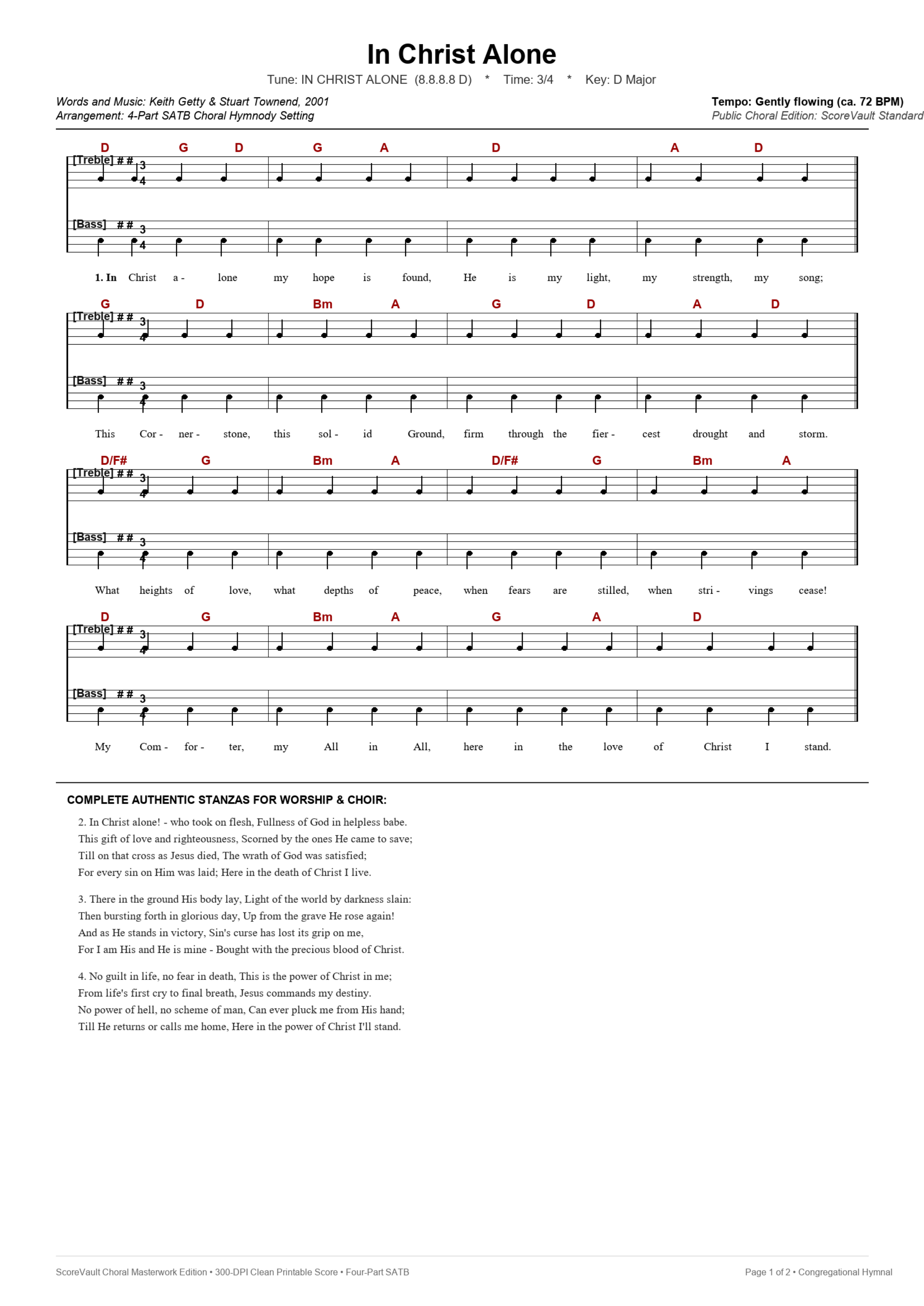
In Christ Alone
Keith Getty & Stuart Townend

How Great Thou Art
Carl Boberg (trans. Stuart K. Hine)
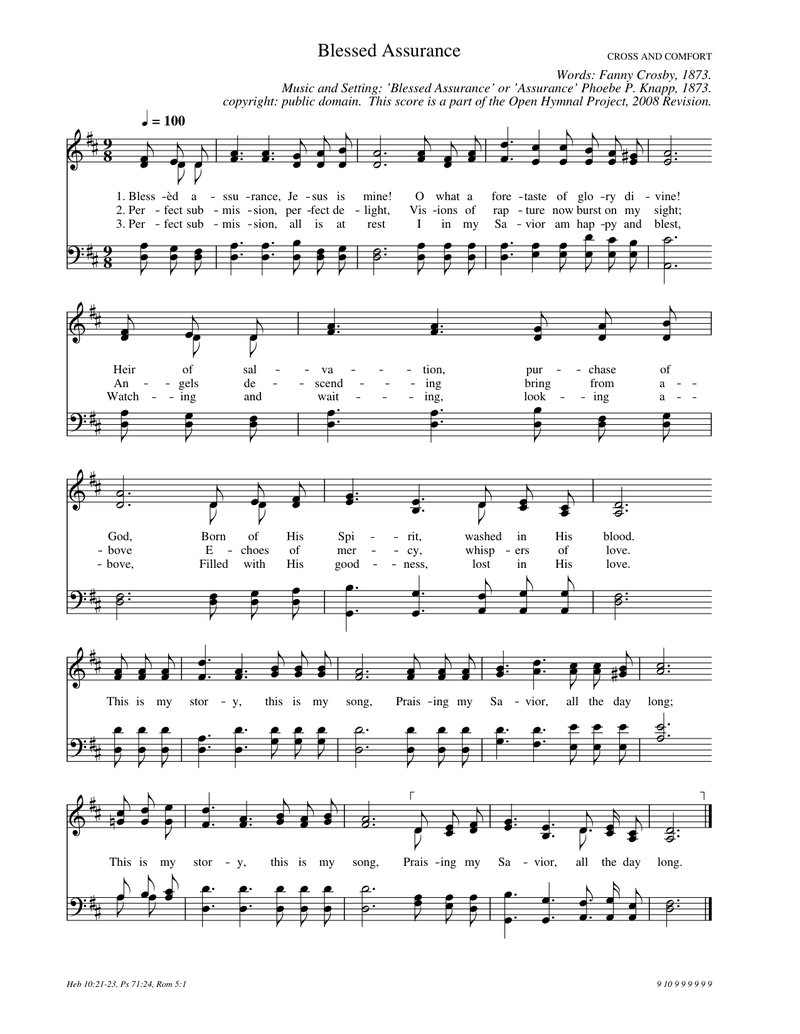
Blessed Assurance, Jesus Is Mine
Fanny J. Crosby
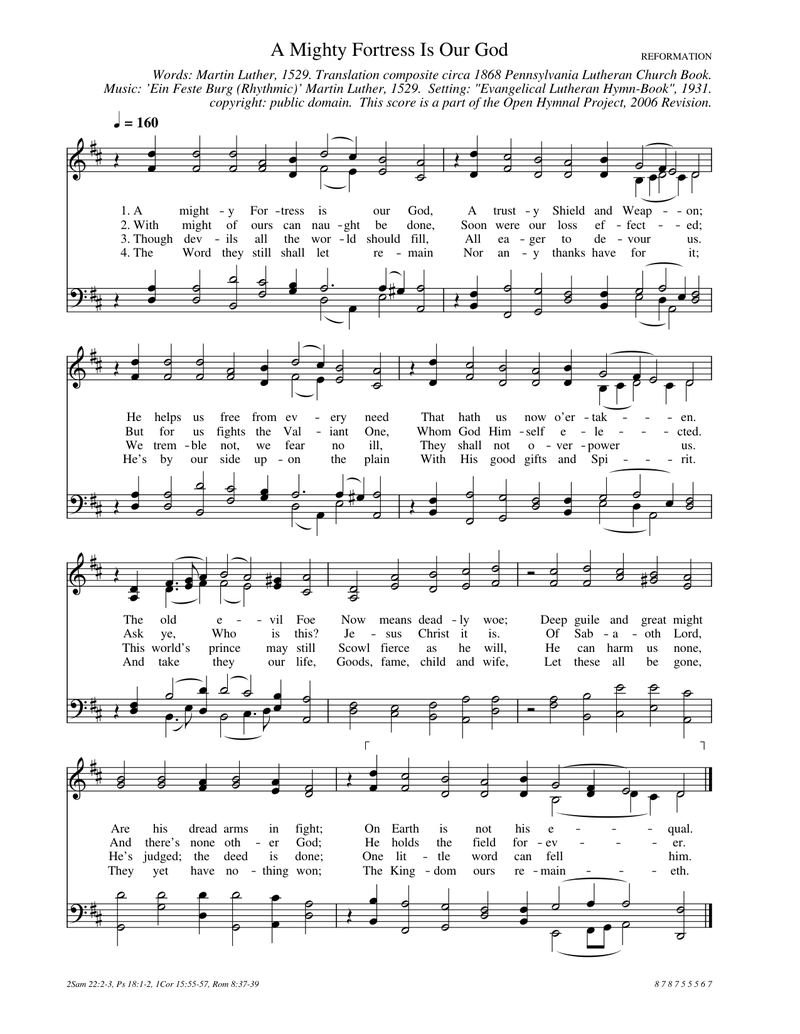
A Mighty Fortress Is Our God
"Common Service Book" (ULCA), 1917, alt

Be Thou My Vision
Dallán Forgaill (attr. 6th century, versified by Eleanor Hull 1912)

Come, Thou Fount of Every Blessing
Robert Robinson

Holy, Holy, Holy! Lord God Almighty
Reginald Heber
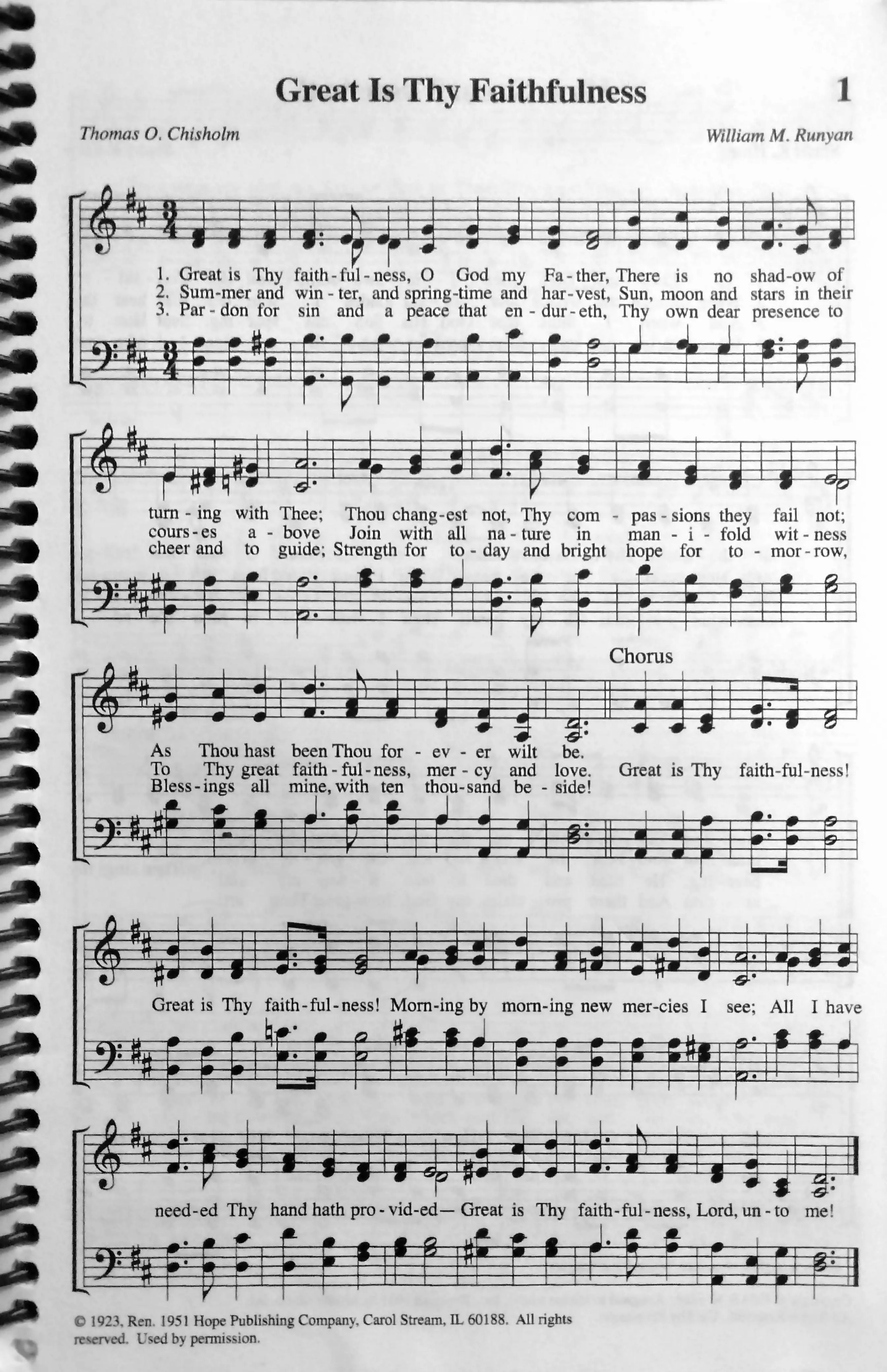
Great Is Thy Faithfulness
Thomas O. Chisholm