

Love Divine, All Loves Excelling
▶️ Don't miss this Song of the Day ◀️
Love Divine, All Loves Excelling – The Beautiful Story Behind Charles Wesley’s Hymn of Perfect Love
Among the greatest hymns ever written about the love of God, “Love Divine, All Loves Excelling” shines as one of Charles Wesley’s finest masterpieces. For more than 275 years, its soaring poetry has led Christians to reflect on a love unlike any other—a love that forgives, transforms, and ultimately makes believers new.
Often sung during worship services, weddings, Easter celebrations, and moments of personal devotion, this hymn speaks not only of God’s love shown through Jesus Christ but also of the lifelong work of the Holy Spirit in shaping believers into Christ’s likeness. Its message is deeply rooted in Scripture and remains one of the most treasured expressions of Christian hope.
Basic Information
Title: Love Divine, All Loves Excelling
Author: Charles Wesley
Written: 1747
First Published: Hymns for Those That Seek and Those That Have Redemption in the Blood of Jesus Christ (1747)
Historical Significance: One of the best-known hymns of the Methodist tradition and one of the most frequently sung English-language hymns worldwide.
Charles Wesley at the Height of His Ministry
By the time Charles Wesley wrote Love Divine, All Loves Excelling, he had already become one of the most influential hymn writers in Christian history.
The dramatic spiritual awakening he experienced in 1738 had transformed both his life and his ministry. Together with his brother John Wesley, Charles traveled throughout Britain, preaching the Gospel to thousands who had little connection with the established church.
Unlike his earlier hymns, which often celebrated the joy of conversion, this hymn reflects a deeper stage of Christian life.
It asks an important question:
What happens after someone becomes a follower of Christ?
Charles Wesley believed that salvation was not only about forgiveness but also about transformation. God’s love does not simply rescue believers from sin; it continues to shape their hearts until they increasingly reflect the character of Christ.
This conviction lies at the very heart of Love Divine, All Loves Excelling.
Lyrics:
1. Love divine, all loves excelling,
Joy of Heav’n to Earth come down,
Fix in us thy humble dwelling,
All thy faithful mercies crown;
Jesus, thou art all compassion,
Pure, unbounded love thou art;
Visit us with thy salvation,
Enter ev’ry trembling heart.
2. Breathe, O breathe thy loving Spirit
Into ev’ry troubled breast;
Let us all in thee inherit,
Let us find thy promised rest;
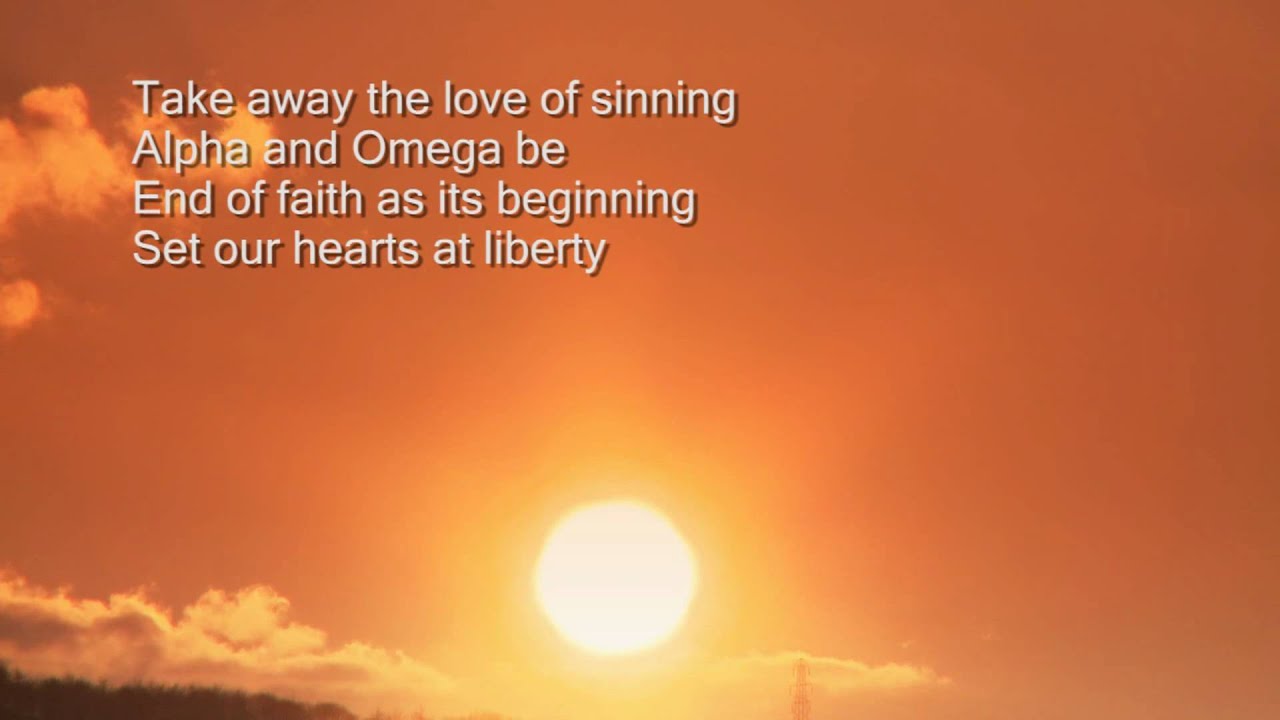
Take away our love of sinning;
Alpha and Omega be;
End of faith as its beginning,
Set our hearts at liberty.
3. Come, Almighty to deliver;
Let us all thy grace receive;
Suddenly return, and never,
Never more thy temples leave.
Thee we would be always blessing,
Serve thee as thy host above,
Pray, and praise thee without ceasing,
Glory in thy perfect love.
4. Finish, then, thy new creation;
Pure and spotless let us be;
Let us see thy great salvation
Perfectly restored in thee;
Changed from glory into glory
Till in Heav’n we take our place,
Till we cast our crowns before thee,
Lost in wonder, love, and praise!

The Meaning Behind the Title
The opening phrase immediately captures attention:
“Love Divine, All Loves Excelling.”
Rather than describing human affection, Charles Wesley speaks of a love that surpasses every earthly expression of love.
Parents may love their children deeply.
Friends may remain loyal through difficult seasons.
Husbands and wives may faithfully care for one another.
Yet every human love has limits.
The love of God, however, is perfect, limitless, and eternal.
The hymn begins by declaring that God’s love is greater than every other love the world has ever known.
Inspired by Scripture
Although the hymn does not quote one passage directly, it is woven together from many biblical themes.
Its message reflects the teachings of:
- 1 John 4, where God is revealed as love itself.
- John 3:16, describing God’s love through the gift of His Son.
- Romans 5:5, which speaks of God’s love poured into believers’ hearts through the Holy Spirit.
- Philippians 1:6, promising that God will complete the good work He has begun.
- Revelation 21, pointing toward the day when God’s people will dwell with Him forever.
Charles Wesley masterfully combined these biblical truths into a hymn that moves from present grace to future glory.
A Prayer More Than a Song
One reason this hymn has remained so beloved is that it is not merely a declaration of faith—it is also a prayer.
Nearly every verse asks God to do something within the believer’s heart.
Rather than celebrating human achievement, Charles Wesley repeatedly asks Christ to enter, remain, and continue His transforming work.
The hymn expresses a humble dependence upon God’s grace from beginning to end.
This prayerful quality has made it especially meaningful during worship, where congregations sing not only about God but also directly to Him.
The Theme of Christian Perfection
One of the hymn’s most distinctive ideas is its emphasis on Christian perfection, a teaching closely associated with John and Charles Wesley.
This phrase has sometimes been misunderstood.
The Wesleys did not teach that Christians could become incapable of making mistakes or achieve absolute moral flawlessness in this life.
Instead, they believed that through the ongoing work of the Holy Spirit, believers could grow into a life increasingly characterized by perfect love for God and for their neighbors.
In this hymn, perfection is not presented as personal achievement but as God’s gracious work within His people.
It is God’s love that transforms.
It is God’s grace that sanctifies.
It is God’s Spirit who continues the work until believers are fully renewed in Christ.
“Finish, Then, Thy New Creation”
Perhaps the most famous line in the hymn comes near its conclusion:
“Finish, then, Thy new creation.”
These words beautifully summarize the Christian journey.
Conversion is only the beginning.
God continues to shape His people day after day.
Every answered prayer, every trial, every act of obedience, and every lesson learned becomes part of His ongoing work of renewal.
Charles Wesley expresses confidence that the God who begins this work will faithfully bring it to completion.
This hope continues to encourage Christians who recognize that spiritual growth is often gradual rather than instantaneous.
A Hymn for Every Generation
Since its publication in 1747, Love Divine, All Loves Excelling has become one of the most widely sung hymns in the English-speaking world.
It appears in Anglican, Methodist, Baptist, Presbyterian, Lutheran, Reformed, and many other hymnals.
Its message has crossed denominational boundaries because every Christian tradition treasures the truth that God’s love transforms lives.
The hymn is frequently chosen for:
- Sunday worship services
- Weddings
- Easter celebrations
- Pentecost services
- Ordination ceremonies
- Christian conferences
- Funeral and memorial services
Its hopeful message makes it suitable for both joyful celebrations and quiet moments of reflection.
Beautiful Melodies That Carried the Hymn Across the World
Although Charles Wesley supplied the words, several melodies have become closely associated with the hymn.
The most beloved today is HYFRYDOL, composed by the Welsh musician Rowland Hugh Prichard in the nineteenth century.
Its flowing, uplifting melody perfectly complements the hymn’s message of divine love and heavenly hope.
Because of its memorable tune, the hymn quickly spread throughout Britain, North America, Australia, Africa, and many parts of Asia, becoming one of the defining hymns of Protestant worship.
Many choirs continue to perform elaborate arrangements, while small congregations often sing it with simple accompaniment, proving that its beauty does not depend on musical complexity.
Why It Still Speaks to Believers Today
Modern life often measures success by achievement, recognition, or personal accomplishment.
This hymn offers a different vision.
It reminds us that the greatest work God desires to accomplish is not outward success but inward transformation.
Charles Wesley points believers beyond temporary circumstances toward God’s lifelong work of shaping hearts marked by love, humility, joy, and holiness.
The hymn assures Christians that they are never left to grow on their own. The same God who calls His people also continues to strengthen, guide, and renew them every day.
Its message remains remarkably relevant in a world longing for authentic love that does not fail.
A Reflection for Today
Every person longs to be loved completely.
Human love, as beautiful as it can be, is often touched by weakness, misunderstanding, or disappointment. Even the strongest relationships cannot fully satisfy the deepest needs of the human heart.
Charles Wesley understood this longing.
Instead of directing our hearts toward imperfect love, he points us toward the One whose love never changes. The love of Christ welcomes the weary, restores the broken, forgives the guilty, and patiently continues His work in every believer.
When we sing Love Divine, All Loves Excelling, we are not simply admiring God’s love from a distance. We are inviting that love to shape our lives until compassion overcomes selfishness, hope replaces fear, and grace becomes visible in the way we treat others.
Perhaps this is why the hymn has remained so meaningful across nearly three centuries. It reminds us that Christianity is not merely believing certain truths about God—it is allowing His perfect love to transform us from the inside out.
Legacy
More than 275 years after Charles Wesley wrote Love Divine, All Loves Excelling, it continues to inspire Christians across continents and denominations.
Its enduring legacy rests not only on its poetic beauty but also on its profound theological vision. It presents the Christian life as a journey that begins with grace, is sustained by divine love, and ends in the joyful presence of God.
Generation after generation, believers have found comfort in its timeless prayer that Christ would continue His work within them until the day they stand complete in His presence.
Its message remains as compelling today as it was in 1747: God’s love is greater than every earthly love, His grace never ceases to transform His people, and His work in every faithful heart will one day be brought to glorious completion.