

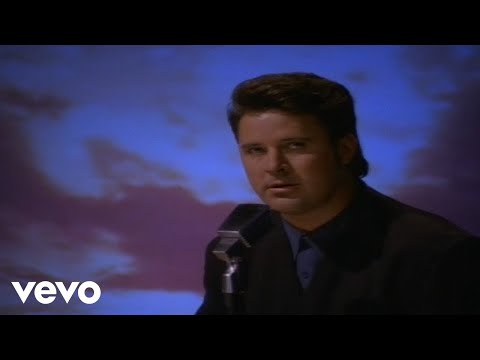
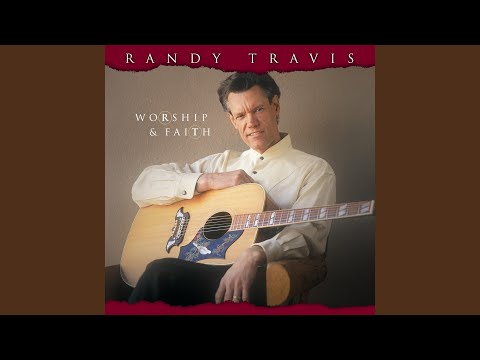
Just A Closer Walk With Thee
▶️ Don't miss this Song of the Day ◀️
The Timeless Hymn That Reminds Us Faith Is a Daily Journey with Christ
Not every prayer asks God to change our circumstances.
Some prayers ask Him to change us.
They do not seek a life free from hardship or a future without uncertainty. Instead, they express a quieter, deeper longing—the desire to know God more intimately, to trust Him more fully, and to walk faithfully with Him through every season of life.
That longing has echoed through the hearts of believers for centuries, and few songs capture it more beautifully than “Just a Closer Walk with Thee.”
Simple in its language yet profound in its message, this beloved gospel hymn has become one of the most enduring songs in Christian music. It has been sung in humble country churches, grand cathedrals, family gatherings, hospital rooms, and funeral services. Across generations and cultures, its gentle prayer continues to resonate because it expresses a desire shared by every sincere follower of Christ:
“Lord, help me walk closer to You.”
More than a song about heaven or worship, Just a Closer Walk with Thee is a hymn about everyday discipleship. It reminds us that the Christian life is not measured by extraordinary moments but by the quiet faithfulness of walking with Jesus one day at a time.
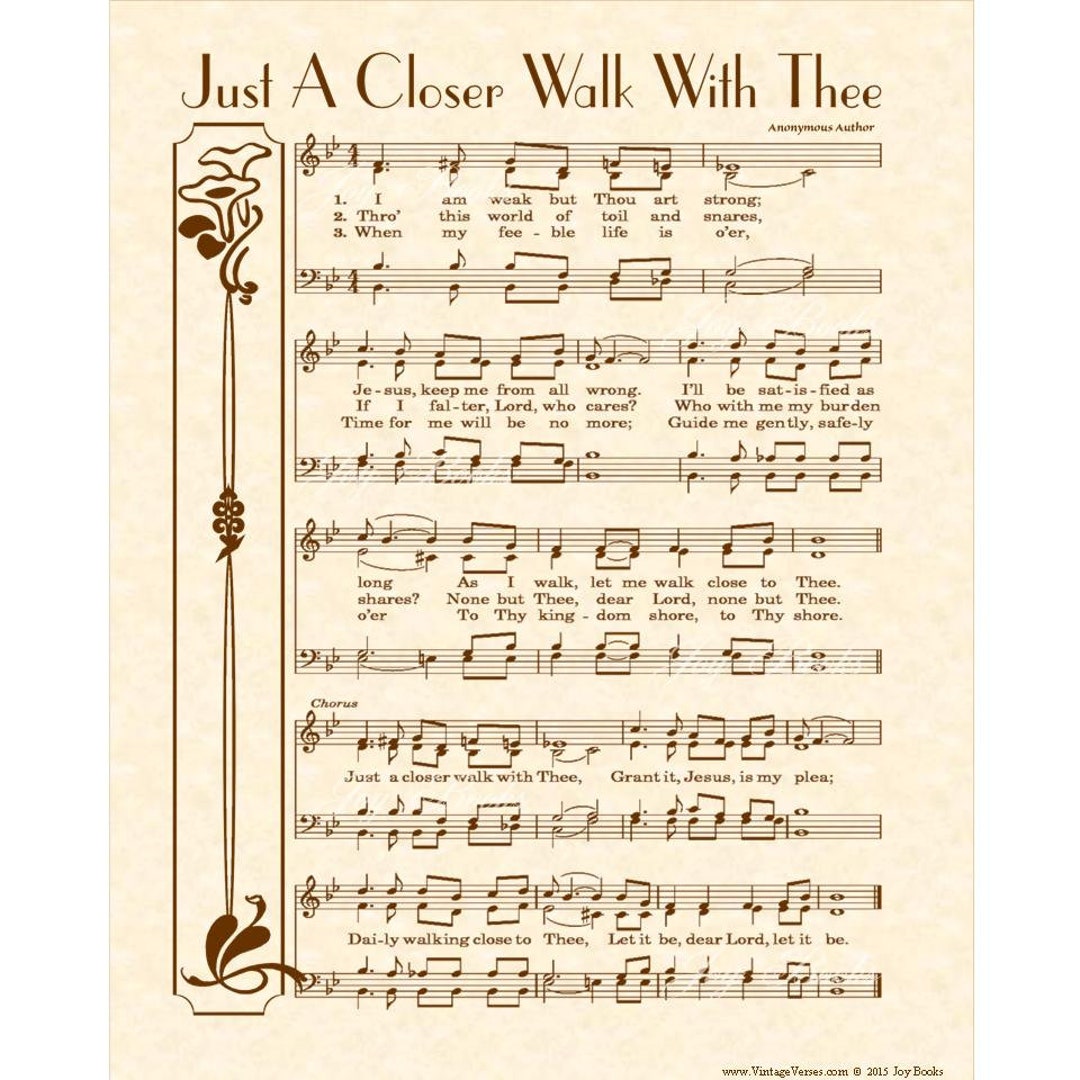
Lyrics:
The Origins of a Beloved Gospel Hymn
Unlike many classic hymns whose authors are well documented, the exact origins of Just a Closer Walk with Theeremain uncertain.
Most historians believe the song emerged from the rich tradition of African American spirituals in the late nineteenth or early twentieth century. It was passed from one generation to another before appearing in printed hymn collections, making it part of the living oral tradition of Christian worship.
Because of its anonymous beginnings, the hymn belongs in a unique way to the Church as a whole rather than to a single composer.
Its popularity grew rapidly throughout the twentieth century, especially in the United States, where it became a favorite in both church worship and gospel music.
Over the years, it has been recorded by numerous artists, including Mahalia Jackson, Patsy Cline, Elvis Presley, and Louis Armstrong. Although each interpretation carries a different musical style, the heart of the song has remained unchanged.
Its enduring popularity proves that genuine faith speaks a language every generation understands.
A Prayer Rather Than a Performance
One of the reasons this hymn has endured is that it never tries to impress the listener.
Its words are remarkably simple.
There are no complicated theological arguments.
No dramatic storytelling.
No elaborate imagery.
Instead, the hymn offers a humble prayer.
It does not ask for wealth.
It does not ask for recognition.
It does not even ask for an easier life.
Its central request is beautifully uncomplicated:
“Just a closer walk with Thee.”
That simple prayer reveals something profound about the Christian life.
The greatest blessing is not merely receiving answers from God.
It is living in close fellowship with Him.
The hymn reminds us that faith is not simply believing certain truths about Jesus.
It is walking with Him daily.
Walking with God Is One of Scripture’s Oldest Images
Throughout the Bible, walking with God describes a relationship rather than merely a destination.
Enoch was known as someone who walked with God.
Noah remained faithful by walking with God in a corrupt generation.
Jesus called His disciples not merely to admire Him but to follow Him.
The Christian life has always been understood as a journey.
Some days are filled with joy.
Others are marked by uncertainty.
There are seasons of spiritual growth and moments of weakness.
Yet through every season, Christ remains present.
This hymn beautifully reflects that biblical vision.
It reminds believers that the goal of faith is not simply arriving in heaven someday but learning to walk closely with Jesus today.
Grace for Ordinary Days
Many Christian songs celebrate extraordinary moments—miracles, victories, or mountaintop experiences.
Just a Closer Walk with Thee focuses on something different.
It celebrates ordinary faithfulness.
The Christian life is mostly lived in everyday moments.
Going to work.
Raising children.
Caring for aging parents.
Serving neighbors.
Making difficult decisions.
Facing disappointments.
Showing kindness when no one notices.
These ordinary moments become sacred when they are lived in the presence of Christ.
The hymn gently reminds us that holiness often grows quietly through daily obedience rather than dramatic events.
Walking closely with Jesus changes not only where we are going but also how we live along the way.
Strength for Human Weakness
One of the hymn’s most comforting themes is its honesty about human frailty.
Every believer eventually discovers personal limitations.
There are moments when our strength fails.
When our faith feels small.
When the burdens of life become difficult to carry.
Rather than pretending to be strong, the hymn approaches God with humility.
It recognizes that believers do not walk through life by their own ability.
They depend on God’s grace every step of the way.
This humility gives the hymn its enduring power.
It speaks not to perfect people but to ordinary believers who know they need God’s help every day.
Why This Hymn Still Speaks Today
Modern life moves at an extraordinary pace.
Schedules become crowded.
Distractions multiply.
Technology keeps us constantly connected, yet many people feel spiritually distant.
In a culture that celebrates productivity and achievement, Just a Closer Walk with Thee offers a gentle invitation to slow down and remember what matters most.
The Christian faith is not ultimately about accomplishing more.
It is about knowing Christ more deeply.
That truth remains as relevant today as it was when this hymn first emerged.
Every generation needs the reminder that spiritual maturity is not measured by outward success but by the quiet faithfulness of walking with God.
Living the Prayer
Perhaps the greatest beauty of this hymn is that it continues after the music ends.
Its prayer becomes a way of life.
Walking closely with Christ means choosing forgiveness instead of resentment.
Serving instead of seeking recognition.
Trusting God when the future remains uncertain.
Listening before speaking.
Loving others with patience and compassion.
The closer we walk with Christ, the more His character becomes visible in our own lives.
People may not remember every sermon we hear or every song we sing.
But they will remember the kindness, humility, and love that flow from a life shaped by Jesus.
That is the quiet transformation celebrated throughout this hymn.
A Legacy That Continues to Inspire
Many songs become popular because they reflect the spirit of a particular generation.
Few continue to inspire century after century.
Just a Closer Walk with Thee has endured because it expresses one of the deepest desires of every sincere believer.
Not a desire for fame.
Not a desire for comfort.
Not even a desire for extraordinary experiences.
Simply the desire to know Christ more intimately.
As long as Christians continue seeking a deeper relationship with their Savior, this hymn will remain relevant.
Its melody may be gentle.
Its words may be simple.
But its message is eternal.
Final Reflection
The Christian life is often described as a race, a pilgrimage, or a journey.
Every journey is made one step at a time.
Just a Closer Walk with Thee reminds us that the goal is not merely reaching the destination but walking faithfully with the One who leads us there.
Life will continue to bring unexpected turns.
There will be seasons of joy and seasons of sorrow.
Questions will arise.
Strength will sometimes fail.
Yet Christ continues to walk beside those who trust Him.
That is the enduring hope of this remarkable hymn.
Its greatest message is not found in musical beauty alone but in the prayer that echoes through every generation:
Lord, let me walk a little closer with You today than I did yesterday.
For when we walk closely with Christ, we discover that His presence is not simply the reward waiting at the end of the journey—it is the greatest gift we receive every step of the way.