
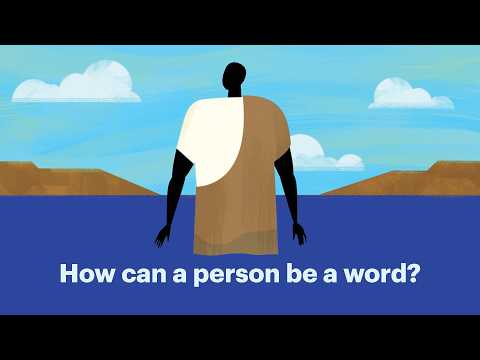
Who Is the Word in John 1:1?
▶️ Don't miss this Song of the Day ◀️
In the hushed reverence of Scripture, the Gospel of John opens with words that have echoed through the centuries, drawing hearts into quiet contemplation: “In the beginning was the Word, and the Word was with God, and the Word was God. And the Word became flesh and dwelt among us, and we beheld His glory, the glory as of the only begotten of the Father, full of grace and truth” (John 1:1, 14, NKJV).
These verses invite us not merely to read, but to ponder the mystery of God’s eternal purpose with humble and worshipful hearts.
The Identity of the “Word”
The “Word” (Greek: Logos) in John 1:1 refers to the divine plan of God concerning His Son, our Lord Jesus Christ. This plan was not a pre-existent person standing alongside God from eternity, but the loving intention and sovereign purpose that resided in the very heart and mind of the Father before the world began.
The Apostle Peter affirms this truth with clarity: Christ “was foreknown before the foundation of the world but was made manifest in the last times for the sake of you” (1 Peter 1:20, ESV). The Word was “with God” in the beginning because it existed as the perfect, predetermined purpose within the divine counsel — an idea, a promise, and a plan of redemption cherished by God from the very first.
How the Eternal Plan Entered Time
When the appointed moment arrived, God brought this sacred plan into visible reality. “But when the fullness of the time had come, God sent forth His Son, born of a woman, born under the law” (Galatians 4:4, NKJV). In the quiet humility of Bethlehem, through the virgin Mary, the eternal plan took on flesh and blood. The Word “became flesh and dwelt among us.”
This was not the transformation of a pre-existing divine person into a man, but the fulfillment of God’s foreordained will in the person of Jesus, the Christ. As Scripture later declares, “He was clothed with a robe dipped in blood, and His name is called The Word of God” (Revelation 19:13, NKJV), pointing to the completed work of the incarnate Son.
Understanding “The Word Was God”
The phrase “the Word was God” has long invited careful reflection. The Moffatt Translation renders John 1:1 with beautiful precision: “The Logos existed in the very beginning, the Logos was with God, the Logos was divine.”
The Word was “God” in the sense that it carried divine power and authority. It was never void of power, for “no word from God shall be void of power” (Luke 1:37, ASV). Just as God Almighty is not without power, so His Word proceeds with the full efficacy of the divine will. It is therefore fitting to speak of the Word as divine — not because the plan itself possessed a separate divine nature, but because it originates from God and perfectly accomplishes His holy purpose.
The True Jesus: Son of the Only True God
Jesus Christ stands before us as the perfect fulfillment of this divine plan. He is the only begotten Son of the Father, full of grace and truth. He is Lord, Savior, and Mediator. Yet the Lord Jesus Himself directs our hearts to the Father, praying: “This is eternal life, that they may know You, the only true God, and Jesus Christ whom You have sent” (John 17:3, NKJV).
The Father remains the only true God. Jesus is the beloved Son sent by Him — the one of whom the Father declared, “This is My beloved Son, in whom I am well pleased” (Matthew 3:17, NKJV). To know the Son is to be drawn into the eternal life that flows from the Father through Him.
A Call to Reverent Contemplation
May this reflection draw us into deeper reverence for the wisdom of God, who from eternity held the plan of salvation in His heart and, in the fullness of time, brought it to glorious fulfillment in the person of His Son. Let us approach the Holy Scriptures with humble hearts, allowing the Spirit of God to illuminate our understanding.
For in coming to know who the Word truly is, we come to know more intimately the Father who loves us and the Son whom He sent for our redemption.